
Think First: How it started, where it’s going
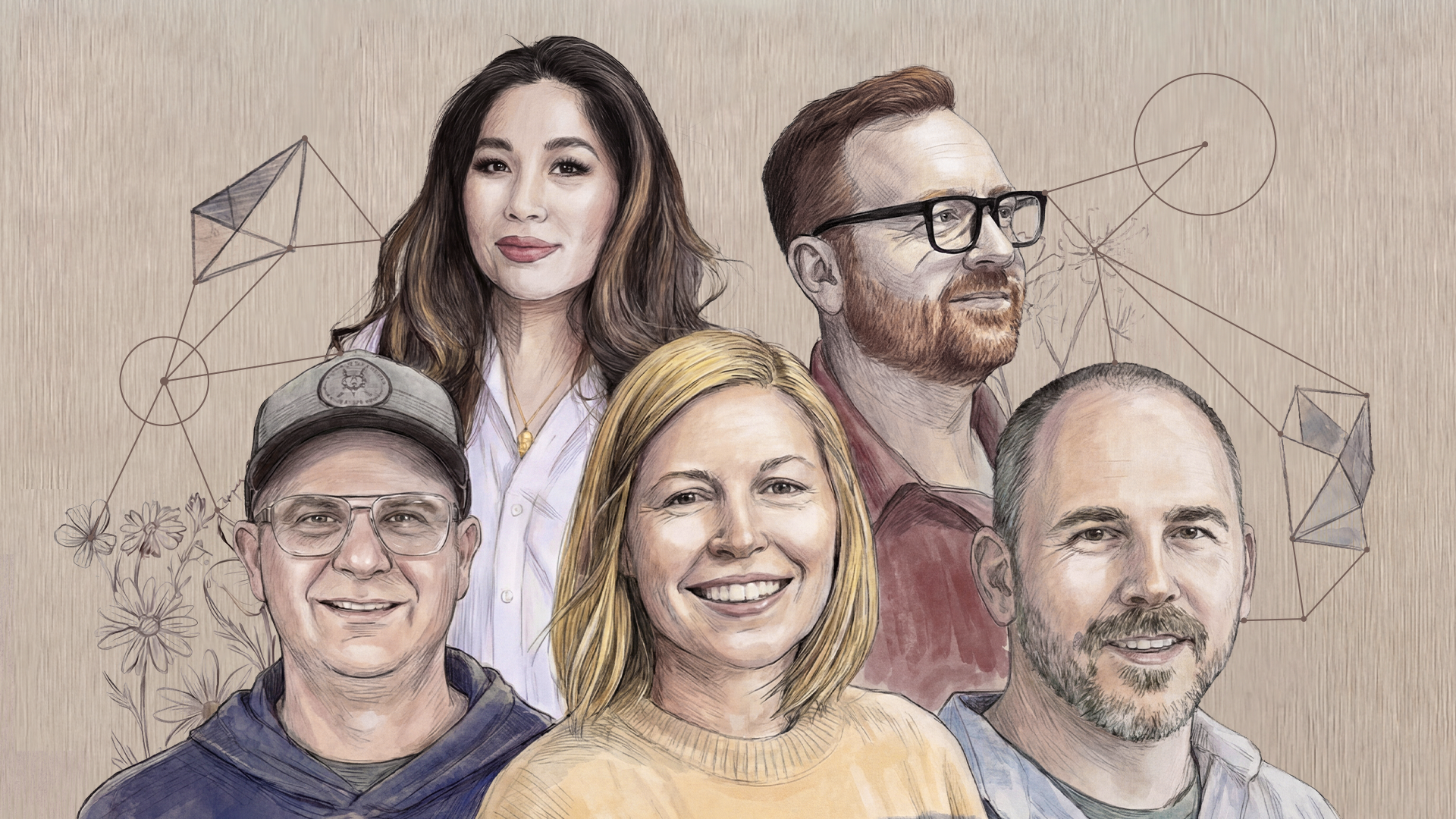
It began as a feeling. Something fundamental was changing within user research thanks to generative AI, and there needed to be a space to think aloud about it.
For Jess Holbrook, UX Research Director of Microsoft AI, that feeling led him to pull together a group of other researchers within Microsoft who were similarly curious. For Amanda Pike, Principal UX Research Manager in the Microsoft Security team, that feeling made her want to understand how different contexts shaped different boundaries. And for Camille Basilio, who helped shape the early direction of the series, and is now a Principal Research Manager at Atlassian, she wondered what a cohesive voice for UXR in the AI era might look like.
Exploring those questions led to the creation of Think First, an interview-driven series of perspectives within and beyond Microsoft that set out to highlight patterns of work and how AI is transforming the field of user research.
We were trying to find the identity of what UXR means, at Microsoft and beyond.
“We were trying to find the identity of what UXR means, at Microsoft and beyond,” said Camille. “There wasn’t a strong voice. Even when content existed, it was all over the place. We wanted a cohesive voice, not cohesive perspectives.”
As lead interviewer for the series, Amanda started the conversations without a fixed hypothesis. She wanted to understand how different contexts shaped different boundaries.
“I didn’t have a specific assumption about what we would hear,” she said. “I only knew what my team was experimenting with, where we felt cautious or skeptical. I didn’t really know what other researchers across the industry were thinking.”
That curiosity extended to finding people to interview and letting conversations unfold. The team intentionally looked for researchers who were using AI to varying degrees, in varying corporate contexts, and with different perspectives.
We wanted to hear from a variety of different people who had different things to bring to the table and different sort of constraints that might be influencing how they approach this problem.
“We wanted to hear from a variety of different people who had different things to bring to the table and different sort of constraints that might be influencing how they approach this problem.”
Finding those voices wasn’t straightforward. AI research practice, she noted, is still nascent, and mostly self-driven.
“There isn’t a central place where these conversations are happening,” she said. “It was a lot of browsing LinkedIn, finding people through other folks, following who was publishing and had a strong point of view.”
The team is currently interviewing several researchers from within Microsoft for the next part of the series sharing, cross-company perspectives.
The common ground, and the differences
Across interviews, the shared belief was clear – AI should amplify human thinking and judgment, not replace it.
That shared belief led to the series’ name – Think First.
Jess recalls a working title for the series that was unanimously rejected.
“I was calling the series Perspectives on research with AI. It was the most literal title.”
There was one other expectation that cut across every conversation.
“Nobody believed in the technology completely from the beginning.” Said Jess. “But everyone was trying it and experimenting. That’s what we were looking for, those experience-based perspectives.” The level of experimentation and human thinking was where the divergences started to show up.
The biggest distinction was how far each person was willing to let AI into their core research work. Everyone had a line.
“The biggest distinction was how far each person was willing to let AI into their core research work. Everyone had a line,” Amanda observed. “A professional or ethical boundary around what should remain human.”
Even the most AI-forward researchers articulated guardrails: verification systems, closeness to raw data, and clear ownership of decisions.
Certain topics – AI moderated research, synthetic users – proved especially polarizing. Some interviewees saw them as democratizing and accelerative. Others saw an unacceptable loss of nuance.
What did it teach the teachers?
As the series evolved, the team putting it together found that they were taking lessons from it too.
For JJ Guajardo, Principal Research Automation Lead in Xbox Research, the conversations began to reshape how he was thinking about AI.
“It has changed my perspective of AI from being an efficiency accelerator to an empowerment tool that allows me to do things that I never ever could have done before. Now I build solutions for myself and others to do things differently.”
The series also made it so clear to everyone involved how rapidly the industry is evolving.
You’re trying to raise the floor and the ceiling at the same time.
“You’re trying to raise the floor and the ceiling at the same time,” Jess said, “There will be people on a team who are on the cutting edge and you want to set them up for success while bringing everyone along for the ride.”
Change is here
The team also had practical advice from this side of the screen.
Amanda urged participation.
“Don’t hesitate to enter the conversation,” she said. “No one has it all figured out. The more voices we have, the better.”
JJ emphasized adaptability.
You have to be comfortable being uncomfortable. This is going to change fast.
“You have to be comfortable being uncomfortable,” he said. “This is going to change fast.”
And Jess returned to the core message of the series itself.
“If something didn’t work for you three months ago, try it again,” he said. “Pick one thing. Start there. Don’t let it overwhelm you.”
What next?
Think First was intended to be a way to highlight patterns of work and to help define UXR in public. And that work continues.
The team behind Think First is united in that the series captured the right insights. They do, however, hope to experiment and play with formats.
“As I was reading the articles, I wanted to see what came out of that process,” said Camille. “It would have been really great to have artefacts that we could see as a result of how they’ve experimented and how they’ve implemented it in their processes.”
As with every project, there were people behind the scenes. Jake Rhodes, UX Researcher in Core AI, explored academic voices who are examining how AI is affecting UX Research. The results of those explorations are not as accessible as an interview with a subject matter expert. He agrees that there are ways to play with formats to lean into the medium of the moment
“I think structuring the content around the academic perspective on changes in methods, changes in impact and changes in governance, is the right structure. I would change the format slightly, make it a little more bite size, maybe more visual.”
So, Think First will be back, with more voices and new methods.
If you are interested in being interviewed or contributing to the series, please email [email protected].