


Create Ways of Being
Art, AI, and Human Existence.
– The estimated reading time is 8 min.
Editor’s Note:
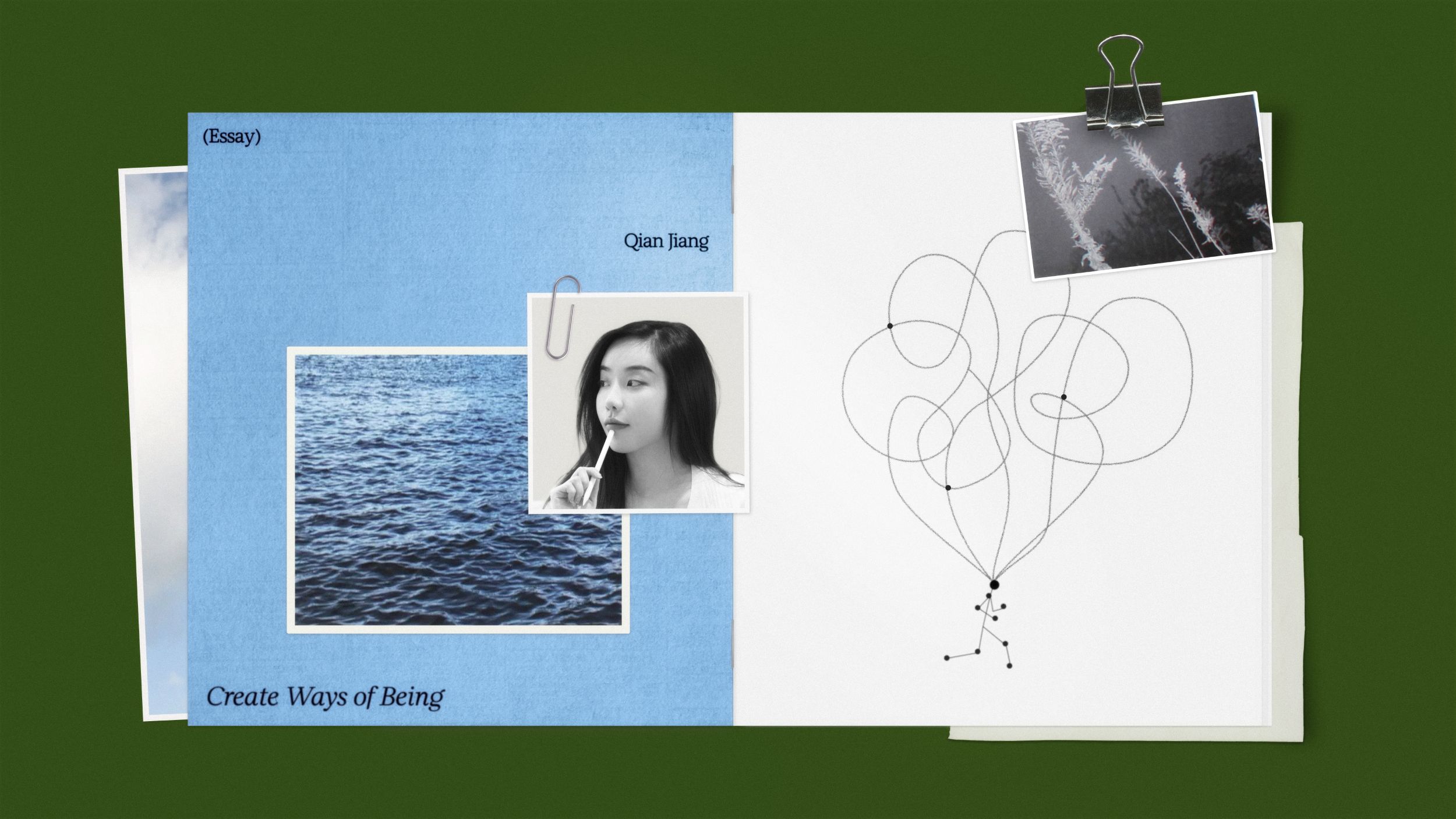
Qian is an AI Designer at Microsoft Copilot. She is also an artist whose work has been exhibited at the Louvre in Paris, Tate Modern in London, and in shows across the U.S. and Asia. She has received multiple international awards, been featured by critics in The Times, and had her work recognized by figures including Andreas Gursky.
Across both design and art, she asks the same question from two directions: as AI reshapes our world, how can human beings live fully, creatively, and meaningfully?
Garden of Eden
Before I turned twenty, I loved sitting by the pond beneath an apricot tree on campus. I was an art student in China, the country that shaped my earliest understanding of the world.
I read Zhuangzi, an ancient Chinese philosopher, and through his stories imagined the giant bird Peng soaring across the sky, the tree Da Chun whose spring and autumn each lasted eight thousand years, and divine beings who lived on wind and dew. I also struggled through Kant, convinced that within those dense pages lay a deeper order behind the world. Sometimes I would sit beside the pond, staring at a single flower, believing an entire world was reflected within it. And already, a question had begun to take root in me.
How should we exist as human beings?
I had no idea that question would stay with me for the next decade.
Later, when I left university, it felt as though I had slipped out of my own Garden of Eden and into the real world. China, with a population of more than a billion, was changing at an extraordinary pace. Almost overnight, we went from simply using mobile phones to living almost entirely in a digital world. Even the woman selling roasted sweet potatoes on the street accepted Alipay.
There was a contagious optimism. Everyone believed that if we worked hard enough, tomorrow would inevitably be better. I believed that too, until I started looking at more than just the Shanghai skyline.
I saw construction workers eating instant noodles on the roadside before returning to unfinished buildings. I looked up at office towers at eleven o’clock at night and saw entire floors still lit. I passed people with empty eyes, drifting through the city as if they no longer knew where they were going. Somewhere amongst all of that, ways of living that exhausted us had simply become life itself. And I couldn’t stop wondering whether it had to be this way.
How should we live?
Talent and Pain
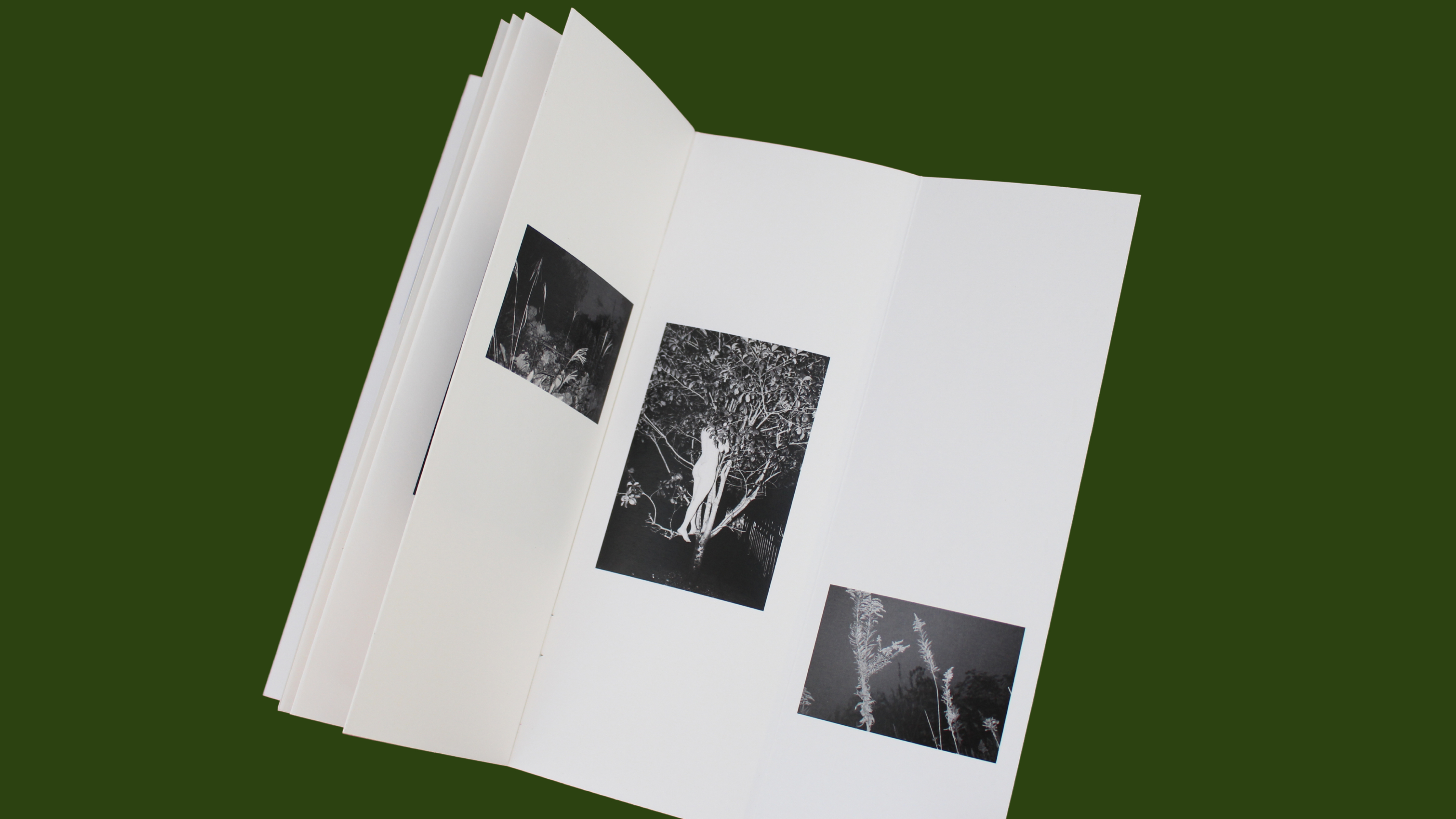
That question stayed with me. As someone deeply sensitive, I often felt other people’s struggles as if they were my own. I could see the suffering around me, but I could not resolve it. So, I created.
I also kept reading philosophy. I was particularly drawn to the Buddhist idea of Śūnyatā, or emptiness. It does not mean that nothing exists. It means that nothing possesses an independent, permanent essence. Everything arises through causes, conditions, and relationships, and is constantly changing. I was drawn to it because it made room in my mind and quieted what obscured my view, so I could feel again, think again, and return to myself.
Later, I realized many of the spaces I loved shared this same philosophy.
Emptiness is not absence. It is the space in which reality can reveal itself.
I found it in Tadao Ando’s Church of the Light, where a cross-shaped opening in concrete lets light, weather, and time continually reshape the space. I found it in Kazimir Malevich’s painting White on White, which turns our attention back onto perception itself: instead of asking us to look at a painting, it makes us aware of the act of looking.
Inspired by these ideas, I wanted my art to create space for people to perceive more deeply, become present, and imagine other ways of being.
One of my photographic works, One Minute of Photographic Time, stretches over three meters in length. I photographed a river once every second for one minute. As viewers follow the subtle movement across the image, each moment dissolves into a continuous flow of time. My hope was to invite them to question their own relationship with time.
In other works, I transformed the gallery into an immersive environment using textiles, interactive LED imagery, sand, soil, and living plants. I wanted to bring back what we so often overlook: the feeling of nature, the subtle movements of our own minds, the quiet awareness always there but rarely noticed.
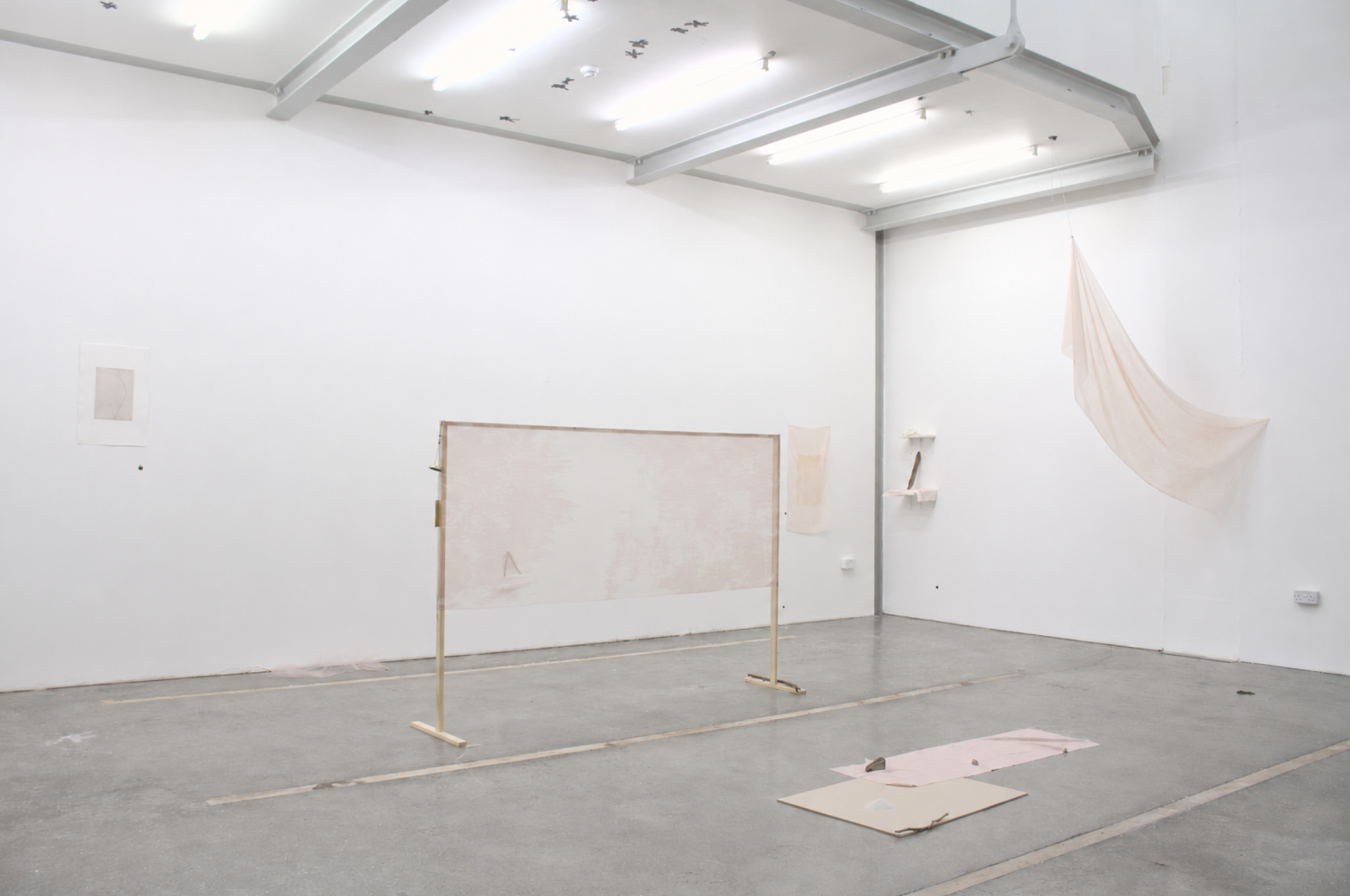
I began to see art not as something that delivers answers, but as something that creates the conditions for awareness. If, even for a brief moment, someone became more present or more connected to themselves and the world, then perhaps the work had already done enough.
Struggle and Miracle
Art became my way of resisting the world. But there were moments when the darkness seemed almost capable of swallowing me whole. Then, a miracle happened.
I came across a scene from the animated series Arcane. One of the show’s characters, Jayce, as a child, watched his mother collapse in a snowstorm. A mysterious mage saved her, and in an instant the frozen landscape burst into flowers. That moment inspired Jayce to spend his life making magic accessible to ordinary people through a technology he created called Hextech. It would be used to heal the sick and transform lives.
That was the moment something became clear to me:
Art can change how we see the world. Technology can change how we live in it.
For the first time, what I wanted to make was not another exhibition. I wanted something that could become part of people’s everyday lives, something tangible that could genuinely make lives better.
I started learning again. Design, software, engineering. Eventually, that journey brought me to Microsoft, where I now design Copilot.
The strange thing is how much of my art has come with me. I brought the same principle from my art studio into software: to question the ways of being we have taken for granted, and to imagine new ones. What new ways of being can we create in the digital world?
Our digital lives have long been fragmented across files, applications, emails, and countless interfaces, and human cognition has been forced to mirror the architecture of software. With Copilot, we are exploring a more horizontal intelligence layer that can connect information and context across those boundaries.
Where computers once helped us store and retrieve, AI now begins to gather, reason, and synthesize with us. People can spend less time processing information and more time questioning it, judging it, connecting it. And as AI becomes more ambient, every microinteraction has to be carefully designed, or it easily becomes another source of interruption.
Beneath all of this is a principle I care deeply about: automation. Here, something from my art returns. I was drawn to emptiness because I learned that creation does not always begin by adding more. Sometimes, when what obscures attention is removed, something more meaningful is finally able to appear. I think about automation the same way, not productivity for its own sake, but the removal of work that no longer deserves so much human time.
If technology can remove more of the mechanical labor that fills our days, what do we want to make room for instead?
Imagining and Building
I feel like the way we live could be much better. Although we’re still at the beginning of developing AI, the technology’s potential gives us a chance to reimagine life, and to create new ways of being.
In my artistic practice, I have begun exploring AI as a creative medium. One recent project is inspired by Hieronymus Bosch’s The Garden of Earthly Delights, reimagining that world through the lens of AI: the birth of AI, a future where humans flourish with the help of intelligent tools, while also asking what happens when things go wrong.
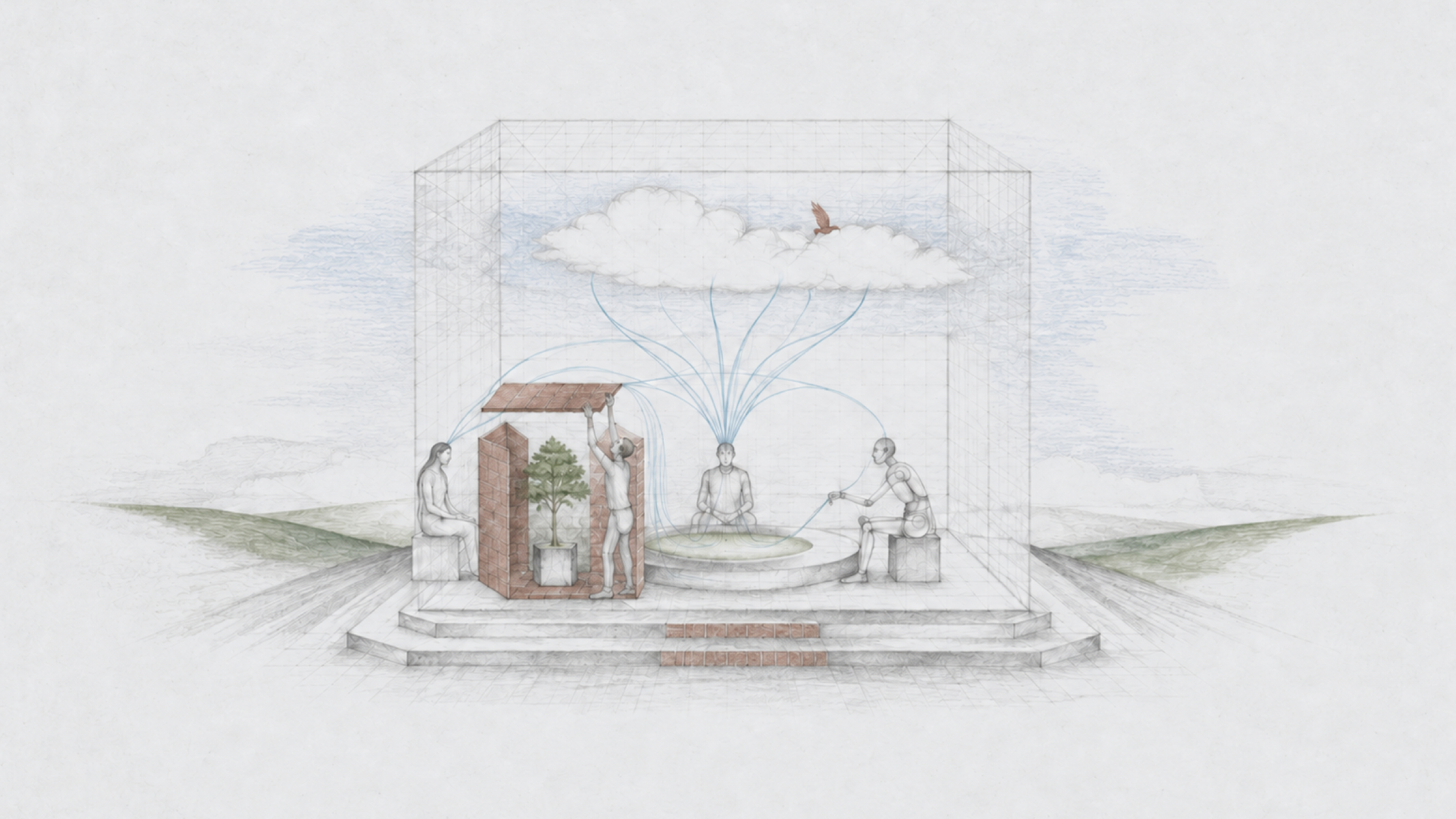
The more powerful technology becomes, the more carefully we must consider the future it leads us toward.
Art gives me a space to imagine those possibilities. Design asks a different question:
How do we actually build them?
Every product can lead to a different vision of the future, and every design decision quietly shapes how people interact with technology. I believe design is the practice of creating future ways of being. Designing AI is therefore not only a technical challenge, but a profound human responsibility. The most important question becomes: What kind of future are we building toward?
More than ten years ago, sitting beside that pond, I asked myself how we should exist as human beings. I still don’t have an answer. But I will keep trying to imagine one, and now, to help build one.