


Bringing a humanitarian lens to the future of AI
– The estimated reading time is 5 min.
For the last 4 years, I have been a Principal UX Researcher at Microsoft. It has meant translating customer insight into frameworks, design principles, and product direction that help teams build experiences for people around the world.
I am also the founder of a charity called “Baal Dan“, which means “donation to children”. My charity provides grants to grassroots organizations to support vulnerable children with food and education. We feed over 1,600 children every day and in the past 20 years, we’ve helped over 15,000 children in 15 countries.
All my experiences have reinforced something I believe deeply: we all have a responsibility to make the world a better place. To bring relief where we can, if we can.
I know firsthand from my work at Microsoft that AI has enormous potential in every sector, particularly for nonprofits who operate with lean teams, limited resources, and immense operational complexity. AI can be harnessed to reduce burden, so people can be freed up to focus more of their energy on impact.
For me, this is where my two worlds connect. Whether I am researching Copilot adoption, or, evaluating food aid programs, the core question is similar: How do I build systems that help people with what they need most?
From theory to human truth
Over the last 20 years, my career has spanned advertising, branding, and consulting. When I joined Microsoft in 2017, I spent 4 years in market research. When people ask me why I moved from market research into UX research, I often describe it as the difference between looking through a telescope and looking through a microscope.
Market research is expansive. I loved that work because it helped me see the bigger picture: how people think, what they value, and where trends are moving.
UX research is more intimate. It takes you into moments of hesitation before someone clicks, the moment when a product either supports their thinking or interrupts it. It is precise, intentional, and deeply human.
At Microsoft, that depth matters because the products we build are woven into the daily lives of people everywhere. A small design decision can affect how someone works, communicates, creates, or feels capable.
The research that stays with you.

Some of the most meaningful studies have revealed that people don’t just tell you what they do, but why it matters. It can be humbling to witness the friction they experience, and inspiring to see their resilience and ingenious workarounds.
One study that has stayed with me focused on accessibility. I was speaking with people who were blind, deaf, and mobility impaired about the technology they relied on.
What struck me was not only the complexity of the tools they had to navigate (sometimes dozens at a time), but how they had to do the work of adapting systems that should have been adapting better to them. That experience reinforced that accessibility is not a feature area on the side. It is a measure of whether we are truly designing for human diversity.
Working in AI has made that responsibility feel even more urgent. In a recent conversation, a customer said to me, “My manager expects me to have the skills to deploy agents ASAP.” People are under immense pressure to upskill with AI, and we need to build tools that are adapting to their needs.
Bringing a humanitarian lens to technology
As my founding of a charity makes clear, my interest in human-centered systems did not start with technology. It started with humanitarian work. I was inspired to start my own nonprofit because my grandfather was an orphan.
This humanitarian work has taken me into orphanages, refugee camps, conflict zones, and some of the largest urban slums in the world. I have leveraged my skills in research to identify and audit grassroots projects and develop a highly efficient “zero-waste” operating model that ensures that 100% of every dollar donated goes directly to the kids because I use my salary to cover all operating expenses.
One of my proudest achievements was taking 26 little girls living in the slums of Kolkata, India and providing them with private education (K-12). And in the last 2 years, we have provided life-saving food to over 1,000 severely malnourished children in Ethiopia.
From building two schools (India and Zambia), supporting dozens of orphanages and feeding over 1,600 children every day, my charity has helped to reach children who have no other safety net. And the research and auditing rigor I have developed professionally is embedded in the way I run my charity.
Connecting my worlds
The role of UX research is to keep people visible in the process. To help teams understand not only what users are doing, but what they are trying to achieve and what stands in their way. It is no different than the work I do with my nonprofit, trying to identify children and project needs, and the most effective ways to address them.
This is the work that continues to motivate me, in both UX research and running Baal Dan.
It is about helping people feel seen, supported, and capable in the moments that matter.
Tanya’s charity “Baal Dan” which means ‘Donation to Children’ in Hindi is a US 501c3 established in 2006 that has helped provide aid to over 15,000 children in 15 countries. Learn more at: www.baaldan.org and check out videos of her work on YouTube.
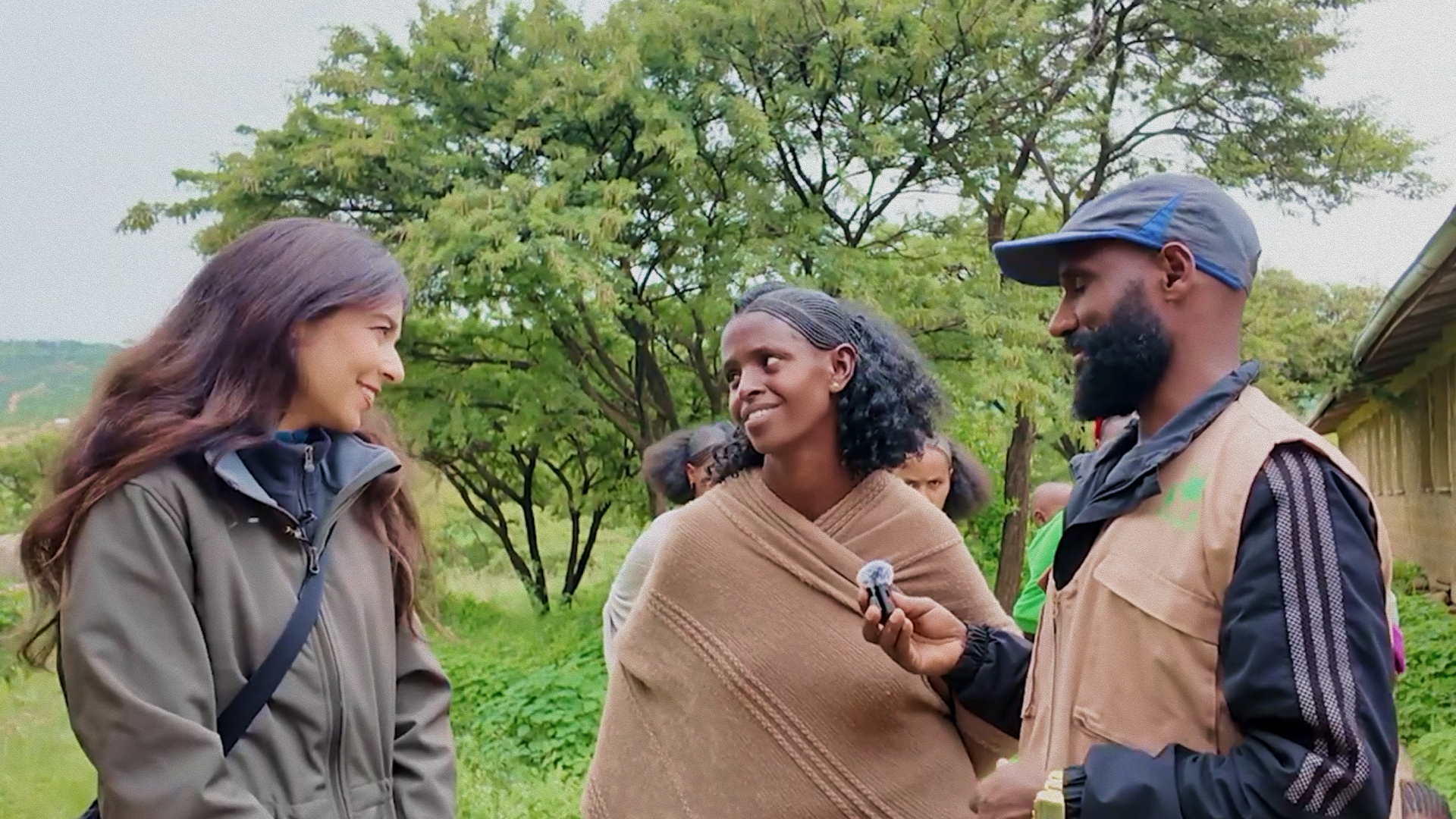
Baal Dan Helps Feed Children in Need with ASDEPO
Tanya Pinto, Founder of Baal Dan Charities (www.baaldan.org) takes you on a journey to Ethiopia to witness the impact of a life-saving food aid program funded by Baal Dan in partnership with ASDEPO in Ethiopia.