
AI that removes friction and elevates human insight in research ops
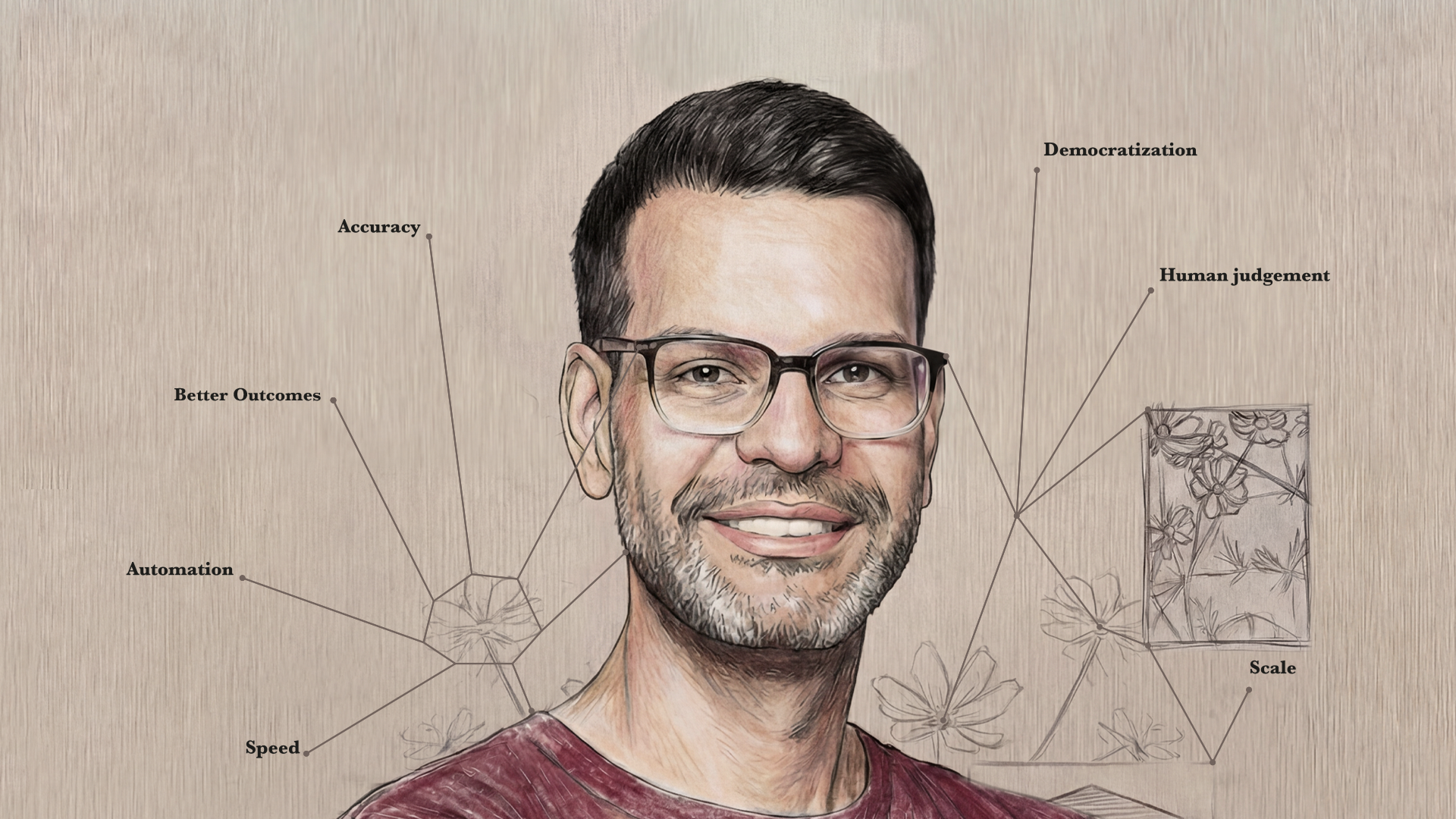
Welcome to another installment of Think First: Perspectives on Research with AI. Last week, we heard from Josh Williams who shared his perspective on how AI is transforming research practices, team dynamics, and the activation of insights at Superhuman. Today, we’re hearing from Rodrigo Dalcin who leads UX Research Operations at Wealthsimple, based in Montreal, Canada.
With nearly a decade of experience in tech, Rodrigo began his career as a front-end developer before transitioning into UX research. He has worked across diverse industries—from B2B supply chain and CMS SaaS at Contentful to leading research operations at Okta (Auth0)—and now manages a fully democratized research model as a team of one. Passionate about leveraging AI to optimize research workflows, Rodrigo focuses on automating tactical tasks, enriching metadata for insights, and creating scalable processes that empower non-researchers. His recent work explores practical AI applications in research operations while maintaining human-centered principles and ethical standards.
Read on to learn more about Rodrigo’s journey with AI, including where he’s seeing the most value, new challenges AI is presenting, and his predictions for the impact AI will have on research as a discipline.
Rodrigo’s AI Origin Story: Finding the Freedom to Innovate
Over the past few years, Rodrigo has observed that some companies have been slow to adopt AI internally, but when he joined Wealthsimple, he found a culture that truly embraces AI experimentation.
“It was only actually in my current job that I had a chance to really experiment with AI tools and see what are different ways that I could incorporate that into research operations. Mostly thanks to the fact that the company really embraces using AI internally as a tool. That definitely gave me some freedom and opportunity to try different tools.”
Automating the Tactical: AI in Day-to-Day Research Ops
As a team of one supporting a 100% democratized research model, Rodrigo faces the dual challenge of optimizing his own bandwidth and reducing friction for non-researchers conducting studies.
There’s definitely a lot of opportunities for me to optimize my own bandwidth and automate some tactical tasks, but I was also looking from the perspective of ‘how can I remove as much friction as possible from the research process as to not discourage those people from actually doing research?’
AI has become a key enabler for automating repetitive, tactical tasks—especially around research repositories. For example, Rodrigo uses AI to analyze interview transcripts and automatically enrich metadata, categorizing client attributes so insights are easier to find later.
“I’ve been leveraging AI like an automation recipe that runs on a schedule, so it looks for any new recordings that have been uploaded to a repository, pulls the transcript from those interviews, and the AI analyzes the transcript and fills out the metadata with the client attributes. It’s been helping a lot just adding that really important layer of metadata to our repository.”
Another practical win: transforming fleeting, tacit knowledge into concrete research reports. After non-researchers conduct interviews, Rodrigo schedules a debrief, uses Gemini to transcribe the conversation, and combines those notes with AI-powered analysis in Dovetail to generate a report—without requiring extra effort from the interviewers.
“Turning that oral knowledge that they’re sharing into a concrete research report…this is something that AI allows us to do without a lot of effort…this is definitely something that wouldn’t be possible before AI because of the manual process it takes to do proper feedback analysis and put together a report.”
Empowerment and Guardrails: Challenges in Democratized AI Research
Despite the promise, Rodrigo is pragmatic about the limitations and risks of AI.
“You can’t just rely fully on AI and blindly trust its accuracy. I think there’s still a that needs to be done by a human, because at the end of the day it wasn’t an AI conducting the interview, it was a person, and that person actually has to go over that output and make sure that it makes sense, and make sure there are no AI hallucinations involved.”
Rodrigo encourages colleagues to use AI features in their research repository, but always anchors insights to the original learning objectives. This approach helps maintain rigor and relevance, even as new technology introduces new challenges.
Trends and Skepticism: Where AI Falls Short
While other researchers, like Josh Williams, have integrated AI-moderated research into their practice, Rodrigo draws a clear line. He believes human engagement is irreplaceable in research interactions, and relying on AI to facilitate research is misaligned with his team’s values.
I think there’s a level of human engagement that always needs to be there. When it comes to customer support, they’re not interested in dealing with a chatbot or an AI call, they want to talk to a human being. So, I think this would be a counter-value to adopt a tool that would be used to moderate those research activities.
Rodrigo is skeptical of some of the latest AI trends in research, especially AI-moderated studies and artificial users. Having participated in AI-moderated sessions, he found them underwhelming—AI moderators failed to probe deeper or adapt meaningfully to responses.
“That probing, the uncomfortable silence that you sometimes intentionally hold to make sure that the user, the person, the customer fills with more information…I think that’s something that AI cannot replicate.”
Rodrigo is also wary of replacing real user recruitment with artificial or synthetic users, citing ethical and practical concerns.
“There’s some work that UX research professionals need to do into putting some time to look through all of these options…and identify the ones that can actually be used in a valuable way versus the ones that are just fads.”
Looking Ahead: The Future of Research with AI
Rodrigo sees a two-fold future. In organizations that undervalue UX research, AI moderation tools may be used to justify not hiring professionals—a concerning trend in today’s job market. But for research operations, Rodrigo sees opportunity:
“Being able to find innovative or creative ways of applying AI to existing processes, while being mindful where AI stops and the human work starts. To actually look at things that way, it’s going to be a huge differentiator in the job market.”
Rodrigo believes that experience with AI tools and creative integration will set research professionals apart.
Advice for Researchers: Start with Repeatable Tasks, Think Beyond Yourself
Like Josh Williams, Rodrigo’s guidance for researchers experimenting with AI is to start small and in areas of highest value:
“Try to look for opportunities where you have tasks that are repeatable, that are very time consuming…Those are the tasks that you should be aiming to use AI to automate or optimize. Also use AI in a way that is beneficial not only for you in terms of optimizing your time and bandwidth, but also to your partners and stakeholders, because that will change the way they will perceive your work and the value of research or research operations.”
For Rodrigo, the future of UX research is not about replacing human expertise with AI, but about harnessing technology as a creative partner—one that streamlines operations, unlocks new insights, and empowers researchers to focus on what matters most: human connection and meaningful discovery. By embracing experimentation, maintaining ethical guardrails, and continually questioning the value of emerging trends, Rodrigo shows that the real differentiator in today’s landscape is the ability to blend innovation with discernment.
Next week, Savina Hawkins takes us inside her AI-augmented workflow at Anthropic—where end-to-end research that once took weeks now happens in days, without compromising quality. Don’t miss her unique perspective on designing human–AI collaboration that delivers speed, scale, and quality at once.